
Table of Contents
ToggleMontgomery County, PA sits at the crossroads of historic preservation and modern suburban growth. Homeowners here are upgrading century-old rowhomes in Norristown, adding square footage to ranches in Plymouth Meeting, and gutting kitchens in Conshohocken’s post-war neighborhoods. Whether you’re adapting an older home to current codes or maximizing resale value in a competitive market, remodeling in this county requires more than design vision, it demands an understanding of local permitting, realistic budgets, and choosing contractors who know the region’s quirks.
Key Takeaways
- Home remodeling in Montgomery County, PA requires understanding local permits, zoning restrictions, and aging infrastructure—many homes over 50 years old need structural upgrades beyond cosmetic improvements.
- Kitchen renovations are the most popular Montgomery County remodeling projects, with costs ranging from $15,000 for budget updates to $120,000+ for custom high-end designs, with cabinetry being the largest line item.
- Permits are mandatory for structural changes, electrical work, plumbing alterations, and HVAC modifications in Montgomery County townships—skipping them risks failed inspections and invalidates insurance claims during resale.
- Bathroom remodels split into cosmetic refreshes ($5,000–$12,000) and full gut renovations ($20,000–$40,000), with proper ventilation and epoxy grout in showers being essential for preventing mold in the region’s humid climate.
- Verify contractor credentials through Pennsylvania’s licensing board, require proof of $1M+ liability insurance and workers’ compensation, and always request itemized bids with 30/30/30/10 payment schedules to avoid red flags.
- Budget 15–20% contingency for hidden costs like unexpected structural damage, disposal fees ($400–$800), and design services, as Montgomery County’s metro pricing runs 15–25% higher than rural Pennsylvania areas.
Why Montgomery County PA Is a Prime Market for Home Remodeling
Montgomery County’s housing stock is a patchwork: Colonials from the 1920s, split-levels from the 1960s, and newer developments from the 2000s. Many homes need electrical upgrades to support modern loads, HVAC replacements as original systems fail, and kitchen layouts that weren’t designed for today’s open-concept preferences.
The median home age in townships like Cheltenham, Abington, and Lower Merion hovers around 50-70 years. That means aging infrastructure, knob-and-tube wiring, cast iron plumbing, and insufficient insulation. Remodeling isn’t always cosmetic: it’s often structural necessity.
Proximity to Philadelphia drives strong property values. Homeowners invest in renovations knowing the resale market rewards updated kitchens, finished basements, and energy-efficient windows. The county’s mix of school districts, some nationally ranked, also means families stay longer and reinvest rather than relocate.
Zoning in Montgomery County leans suburban with tight setback requirements and lot coverage limits. Additions often hit zoning ceilings before structural limits, so many projects focus on interior reconfiguration, second-story additions, or converting unfinished space.
Most Popular Remodeling Projects in Montgomery County Homes
Kitchen Renovations
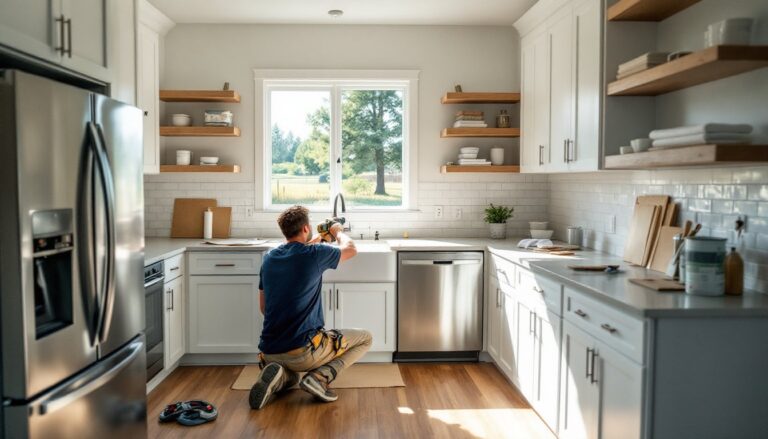
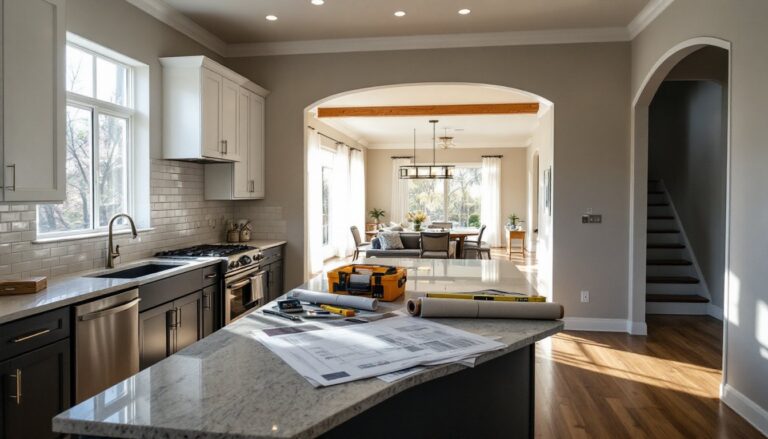
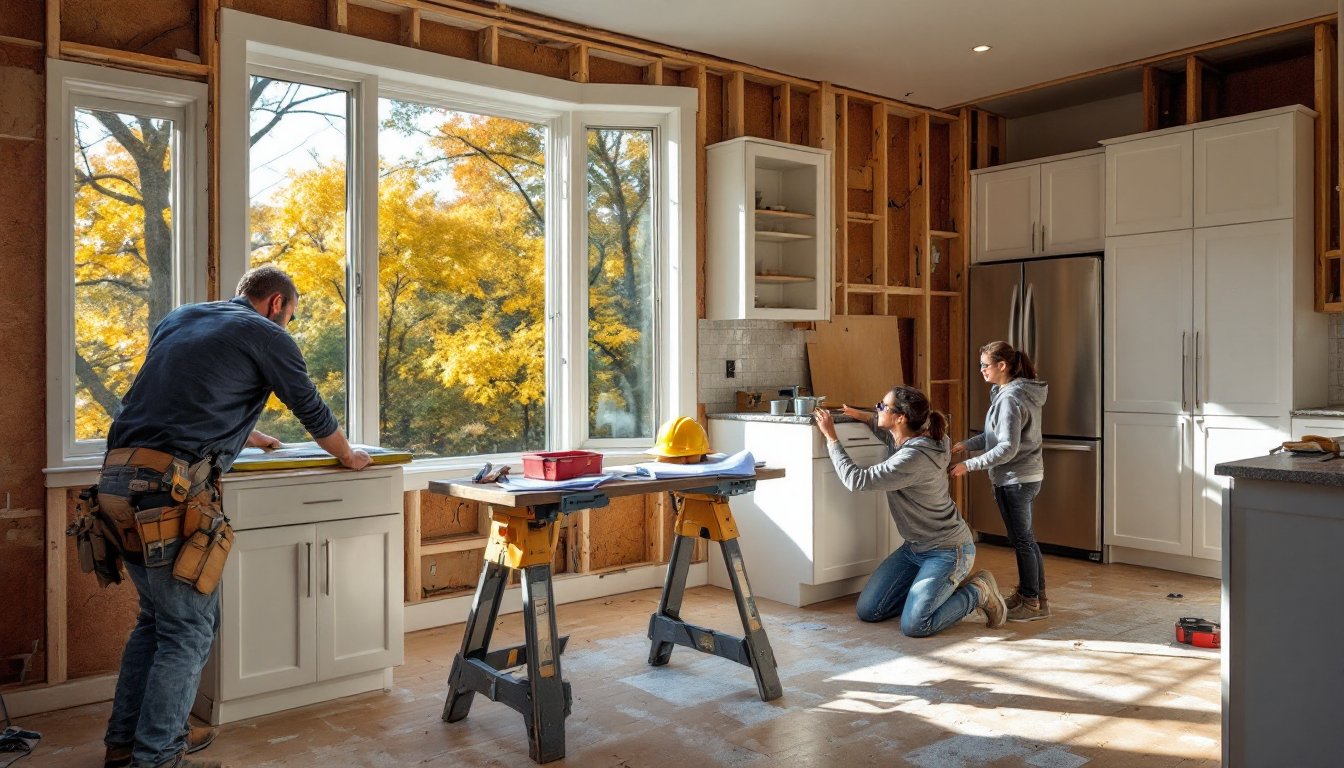
Kitchen remodels dominate Montgomery County’s project list. Older homes typically have galley or U-shaped kitchens walled off from dining areas. Homeowners knock out non-load-bearing partitions to create sight lines to family rooms, add islands with quartz or granite counters, and upgrade to stainless appliances with panel-ready dishwashers.
Cabinetry is the biggest line item. Stock cabinets from big-box stores run $100-$150 per linear foot installed: semi-custom from regional suppliers like Wellborn or KraftMaid sit around $200-$300: full custom from local cabinet shops can hit $500-$800 per linear foot. For a typical 10×12 kitchen (roughly 20 linear feet of cabinets), budget $4,000-$16,000 on cabinets alone.
Electrical upgrades are non-negotiable. Older panels lack capacity for induction ranges, wine fridges, and undercabinet lighting. Expect to run 20-amp circuits for appliances and add GFCI outlets per NEC 210.8 requirements. Permit fees in Montgomery County run $50-$150 for minor electrical: inspections are mandatory.
Flooring choices lean toward luxury vinyl plank (LVP) for budget builds and engineered hardwood or porcelain tile for higher-end projects. LVP costs $3-$7 per square foot installed, mimics wood grain convincingly, and handles moisture better than laminate.
Bathroom Upgrades
Bathroom remodels in Montgomery County split into two tiers: cosmetic refreshes (new tile, vanity, fixtures) and full gut jobs that address plumbing stacks, subfloor rot, and outdated drain lines.
Cosmetic projects, swapping a pedestal sink for a 36-inch vanity, retiling a tub surround with 3×6 subway tile, replacing a builder-grade mirror with a framed version, run $5,000-$12,000. Add in a new acrylic alcove tub ($300-$600) or a fiberglass shower base ($200-$400), and you’re still under $15,000 with labor.
Full renovations that move plumbing, enlarge the footprint, or add radiant floor heating climb to $20,000-$40,000. Moving a toilet requires rerouting the 3-inch waste stack, which often means opening ceilings below. If the bathroom sits over a finished basement or first-floor room, access becomes expensive.
Tile choices matter for longevity. Porcelain holds up better than ceramic in freeze-thaw cycles (relevant for poorly insulated exterior walls). Use bullnose trim at transitions and schluter strips for clean edges. Grout should be epoxy-based in showers: traditional cement grout stains and cracks within five years.
Ventilation is code-required but often overlooked. Bathrooms need either an operable window or a 50-CFM exhaust fan vented to the exterior (not into an attic). Skipping this invites mold in Montgomery County’s humid summers.
Navigating Permits and Regulations in Montgomery County
Montgomery County operates under the International Residential Code (IRC) with local amendments. Permits are handled at the township level, Whitpain, Upper Dublin, and Lower Providence each run their own building departments with slightly different fee structures and turnaround times.
Permit triggers include:
- Structural changes (removing load-bearing walls, adding beams)
- Electrical work beyond replacing fixtures (new circuits, panel upgrades)
- Plumbing alterations (moving drains, adding bathrooms)
- HVAC installation or ductwork modifications
- Additions, decks over 30 inches high, and finished basements
Cosmetic work, painting, flooring, cabinet swaps, generally doesn’t require permits. But if you’re opening walls, assume you need one.
Permit fees vary. Expect $75-$200 for minor electrical, $100-$300 for plumbing, and $300-$800 for addition or structural permits based on valuation. Plan submissions require stamped drawings for structural work: many townships accept homeowner-drawn plans for simple projects.
Inspection schedules typically include rough-in (framing, electrical, plumbing before drywall) and final. Miss an inspection window, and you’ll wait days to reschedule, delaying the project. Contractors familiar with Montgomery County inspectors know which details get flagged, handrail height (34-38 inches per IRC), tempered glass within 18 inches of a door, AFCI protection on bedroom circuits.
Skipping permits risks failed inspections during resale and invalidates homeowner’s insurance claims if unpermitted work causes damage. It’s not worth the gamble.
Finding the Right Contractor for Your Montgomery County Project
Montgomery County has no shortage of contractors, but quality ranges from licensed general contractors with liability insurance to unlicensed handymen working cash-only.
Licensing requirements: Pennsylvania doesn’t mandate state-level general contractor licenses for projects under $5,000, but most serious contractors carry the PA Home Improvement Contractor (HIC) registration. Plumbers and electricians must hold state licenses. Always verify credentials through Pennsylvania’s licensing board.
Insurance is non-negotiable. Request proof of general liability (minimum $1 million) and workers’ compensation if they employ anyone. If a worker gets injured on your property and the contractor lacks coverage, you’re liable.
Referrals and reviews matter, but don’t rely solely on online ratings. Ask for references from projects completed in the last 12 months in Montgomery County specifically. A contractor who excels in Philadelphia rowhouses may struggle with suburban ranch additions. Homeowners often use platforms like Angi to compare contractors and read verified reviews before making decisions.
Bids should be itemized: labor, materials, permits, disposal. A lump-sum bid with no breakdown is a red flag. Expect 10-15% variance between bids: if one comes in 40% lower, they’re either cutting corners or planning change orders.
Payment schedules typically follow a 30/30/30/10 structure: 30% deposit, 30% at rough-in, 30% at substantial completion, 10% final after walkthrough. Never pay the full amount upfront. Red flags include demands for cash, no written contract, or pressure to start immediately without permits.
Timeline realism: A full kitchen remodel takes 4-8 weeks depending on custom cabinetry lead times. Bathroom renovations run 2-4 weeks. Delays happen, back-ordered tile, inspection reschedules, unexpected subfloor damage. Build in a 20% time buffer.
Budgeting Your Remodel: Cost Expectations in Montgomery County
Montgomery County sits in the Philadelphia metro cost tier, 15-25% higher than rural Pennsylvania counties but below Manhattan or Boston markets.
Kitchen remodels:
- Budget (cosmetic updates, stock cabinets, laminate counters): $15,000-$30,000
- Mid-range (semi-custom cabinets, quartz counters, new appliances): $35,000-$60,000
- High-end (custom cabinets, slab backsplash, pro-grade appliances): $70,000-$120,000+
Bathroom remodels:
- Cosmetic refresh: $5,000-$12,000
- Mid-range gut renovation: $18,000-$30,000
- Luxury spa bath: $40,000-$70,000
Basement finishing: $30-$75 per square foot depending on finishes. A 600-square-foot basement with basic drywall, carpet, and a half-bath runs $20,000-$35,000. Add a wet bar, upgraded flooring, and recessed lighting, and you’re at $45,000-$50,000.
Additions: $200-$400 per square foot for a ground-level addition (foundation, framing, roofing, finish work). A 200-square-foot bump-out for a primary suite costs $40,000-$80,000. Second-story additions run slightly less since the foundation exists, but staging and temporary support beams add complexity.
Hidden costs homeowners miss:
- Disposal: $400-$800 for a 20-yard dumpster
- Temporary housing: If the kitchen’s gutted for six weeks, eating out or renting a hotel adds up
- Design fees: Architects charge $3,000-$8,000 for plans: kitchen designers often work on commission through cabinet suppliers
- Carrying costs: Property taxes and utilities don’t pause during construction
Many homeowners rely on cost estimators from HomeAdvisor to get a preliminary sense of regional pricing before soliciting contractor bids. For more granular project breakdowns, resources like ImproveNet provide material and labor ranges specific to Montgomery County.
Financing options include home equity lines of credit (HELOCs), cash-out refinances, or personal loans. HELOCs offer flexibility but variable rates: as of early 2026, expect 7-9% APR. Personal loans for $25,000-$50,000 sit around 8-12% for borrowers with good credit.
Contingency budgets: Set aside 15-20% for surprises. Open a wall and find mold, outdated wiring, or termite damage, and that buffer disappears fast. Projects that stay on budget are the exception, not the rule.