
Table of Contents
ToggleMobile homes have come a long way from the beige-on-beige boxes of decades past. A fresh coat of exterior paint transforms curb appeal, increases resale value, and helps protect siding from UV damage and weather wear. But picking the right color scheme isn’t just about personal taste, mobile home exteriors have unique material considerations, trim configurations, and proportions that affect how colors read from the street. This guide walks through proven color palettes, trending combinations for 2026, and practical tips for choosing shades that complement your home’s architecture and neighborhood context.
Key Takeaways
- Selecting the right exterior mobile home paint colors enhances curb appeal, increases resale value, and protects siding from UV damage and weathering.
- Trending 2026 color palettes include classic neutrals (beige, gray, white), bold accents (navy, forest green, deep red), and two-tone schemes that add visual depth to your home’s exterior.
- Test paint colors on large poster boards placed against your home’s exterior at different times of day to account for how lighting and weather affect color perception.
- Match your paint choice to fixed elements like roofing material, skirting type, and trim configuration, and ensure the finish suits your siding material (metal, vinyl, or wood requires different paint formulations).
- Prioritize proper surface preparation—including power washing, scraping, caulking, and priming—as this accounts for 50-60% of project time and directly determines whether your paint job lasts 3 years or 10 years.
Why Choosing the Right Exterior Paint Color Matters for Mobile Homes
Exterior paint does more than make a mobile home look sharp. It serves as the first line of defense against moisture intrusion, especially on metal or vinyl siding that can fade or chalk over time. Light-reflective colors reduce heat absorption in hot climates, cutting cooling costs by deflecting UV rays. Darker hues absorb more heat but can hide minor surface imperfections and weathering.
Color choice also affects perceived size and proportion. Lighter shades make narrow single-wides appear more spacious, while darker tones can ground a taller double-wide and reduce its visual height. Trim color creates definition, contrasting trim sharpens rooflines and window frames, while monochromatic schemes lend a sleek, modern look.
From a practical standpoint, some HOAs and mobile home communities have covenants restricting exterior colors to approved palettes. Always check local guidelines before buying paint. Resale value matters, too: neutral bases with tasteful accents appeal to the broadest buyer pool, while highly personalized schemes may narrow your market when it’s time to sell.
Top Trending Exterior Mobile Home Paint Colors
Classic Neutrals: Timeless Beige, Gray, and White Options
Warm beiges and tans remain top sellers for good reason. Shades like Benjamin Moore’s Shaker Beige or Sherwin-Williams Accessible Beige pair well with brick skirting, wood-look shutters, and most roofing materials. They’re forgiving on surface prep, minor chalking or fading blends in during touch-ups. Beige works in both suburban and rural settings, complementing landscaping without clashing with neighboring homes.
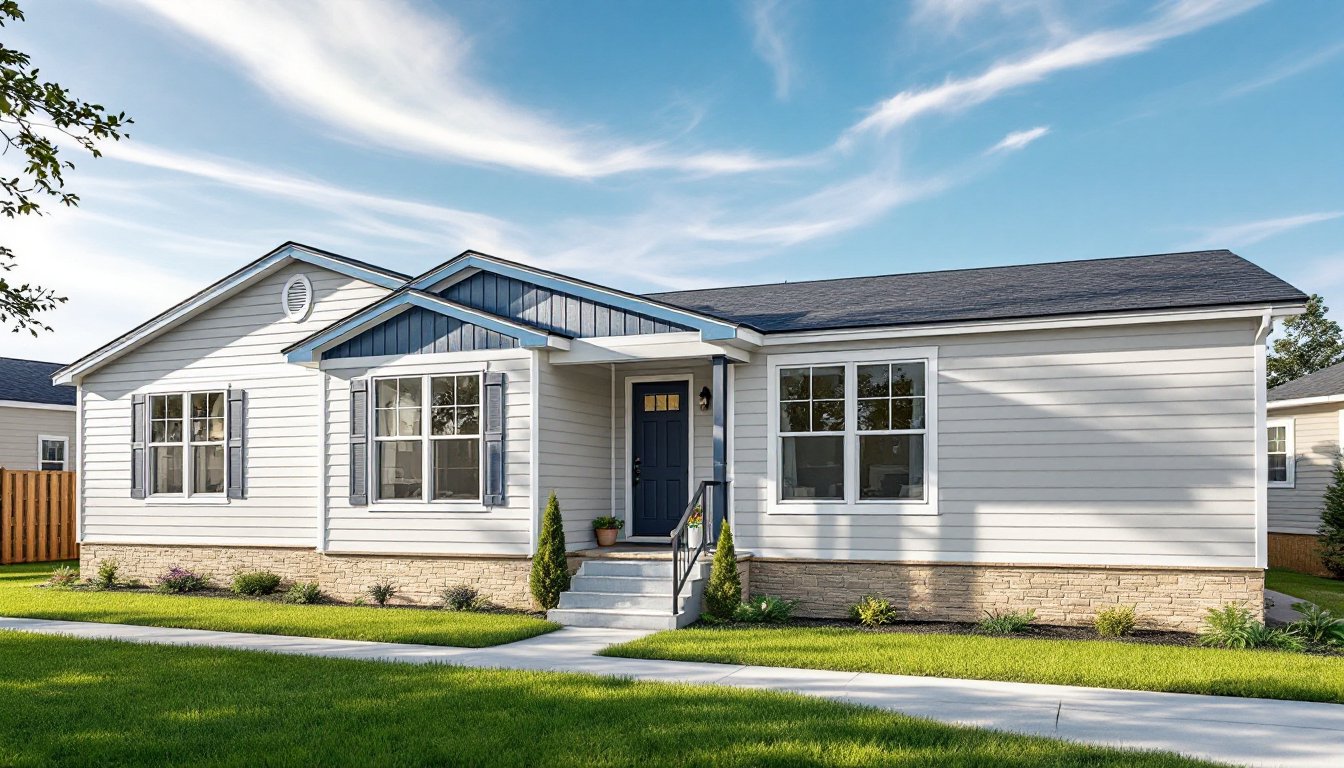
Cool and warm grays dominate 2026 trends. Greige (gray-beige hybrids) like SW Agreeable Gray offer versatility, while true grays such as Benjamin Moore Stonington Gray deliver contemporary appeal. Pair medium grays with crisp white trim and black or oil-rubbed bronze hardware for a clean, updated look. Light grays suit homes with complex rooflines or decorative gable details, as they highlight architectural features without overwhelming the eye.
Whites and off-whites create a fresh, coastal vibe. Pure white (SW High Reflective White) maximizes light reflection in hot climates but shows dirt quickly, plan for annual cleaning. Softer whites like BM Swiss Coffee or SW Alabaster provide warmth and hide dust better. White pairs beautifully with any accent color and makes small lots feel more open, though it requires excellent surface prep since every imperfection shows.
Bold and Vibrant: Navy, Forest Green, and Deep Red Schemes
Navy blue has surged in popularity, especially for homes with historical or farmhouse styling. Shades like SW Naval or BM Hale Navy ground the home visually and pair well with white or cream trim, copper accents, and natural wood doors. Navy resists visible fading better than lighter blues and works in both wooded and open settings. It’s particularly effective on double-wides with gable features or porch columns that benefit from dramatic contrast.
Forest green and sage tones integrate mobile homes into natural surroundings. Deep greens like BM Hunter Green or SW Rookwood Dark Green suit wooded lots or properties near parks, while softer sage (SW Clary Sage) offers a modern farmhouse feel. Green pairs with natural stone skirting, cedar shake accents, and warm metal roofing. These shades are gaining traction in paint color guides as homeowners seek earthy, grounded palettes.
Deep reds and burgundies make a statement without veering into novelty territory. Barn red (BM Cottage Red) or brick-tone reds (SW Fireweed) echo traditional New England or rural architecture. These colors work best on homes with ample trim and architectural detail, single-color red on a plain box can look flat. Pair with black or dark brown trim and consider a contrasting gable or accent wall to break up large expanses.
Two-Tone and Accent Color Combinations That Stand Out
Two-tone schemes add depth and visual interest, especially on double-wides with defined siding breaks or gable ends. A popular approach: paint the main body a neutral base (light gray, beige, or soft white) and the gable, shutters, or front porch section in a complementary accent color.
Gray-and-white combinations remain classic. Use a medium gray (SW Cityscape) on the body with bright white (BM Decorator’s White) on trim, fascia, and porch railings. Add a pop of color on the front door, navy, red, or even mustard yellow, to personalize the entry without committing to a bold body color.
Beige with charcoal or black trim delivers modern contrast. Paint siding in a warm tan (SW Canvas Tan), then use charcoal gray (SW Peppercorn) or black (BM Onyx) on window frames, corner boards, and skirting. This combination suits homes with metal roofing or contemporary landscaping, and it’s forgiving on prep since dark trim hides minor flaws.
Accent gables and horizontal breaks create visual interest on longer single-wides. Paint the main body a soft neutral (light sage, pale gray, or cream) and the gable or top third a richer shade, navy, deep green, or even a muted terracotta. This technique, common in DIY makeover projects, shortens the home’s perceived length and draws the eye upward.
Contrasting skirting and foundation colors tie the home to its site. If your skirting is brick or stone, echo that tone in shutters or trim. For vinyl skirting, paint it a shade darker than the body to anchor the home visually. Avoid matching body and skirting colors exactly, contrast prevents the home from blending into its foundation.
How to Choose the Perfect Paint Color for Your Mobile Home
Start with your fixed elements: roofing color, skirting material, and any brick or stone accents you’re keeping. Pull a sample of each and lay them alongside paint chips in natural light. Roofs in brown, gray, or green tones pair well with warm or cool neutrals, while black or charcoal roofs allow bolder body colors.
Test samples on-site. Paint poster boards (at least 2′ x 2′) with your top three colors and prop them against the home’s exterior at different times of day. Morning light, midday sun, and late afternoon shadows all shift color perception. Leave boards up for a few days to see how they read from the street and in varying weather.
Consider the setting. Homes in dense developments benefit from colors that harmonize with neighbors without duplicating them, choose a different neutral base or vary the trim color. Rural or wooded lots allow bolder choices since there’s less visual competition. Coastal or lakefront properties look sharp in whites, soft blues, or grays that echo water and sky.
Account for material type. Metal siding requires oil-based or DTM (direct-to-metal) exterior paint with rust inhibitors. Vinyl siding needs acrylic latex formulated for flexibility, vinyl expands and contracts with temperature, so rigid paint will crack. Wood or composite siding offers the most flexibility but demands thorough prep: scraping, sanding, priming bare spots, and caulking gaps. Many budget renovation stories emphasize prep work as the difference between a paint job that lasts three years versus ten.
Factor in climate and orientation. South- and west-facing walls take the most UV exposure, choose fade-resistant, high-quality exterior paint (look for warranties of 15-25 years). In humid or rainy climates, avoid flat sheens: satin or semi-gloss finishes shed moisture and resist mildew better. Reflective or “cool roof” paints in light colors can reduce interior temperatures by several degrees in hot regions.
Don’t forget permits and prep. Most jurisdictions don’t require permits for repainting in the same color, but changing colors or painting a rental may need HOA or landlord approval. Budget 50-60% of your project time for prep: power washing (allow siding to dry 48 hours), scraping loose paint, caulking seams, priming bare metal or wood, and masking windows and trim. Skipping prep is the top reason DIY paint jobs fail early.
Conclusion
Choosing the right exterior paint color for a mobile home balances aesthetics, material compatibility, and long-term durability. Whether opting for timeless neutrals or bold two-tone schemes, proper prep and quality materials ensure the finish lasts. Test colors on-site, consider fixed elements like roofing and skirting, and don’t skip the grunt work, mobile home exteriors reward attention to detail with years of curb appeal and protection.