
Table of Contents
ToggleRoaches are one of those household pests that make even the most stoic homeowner cringe. They’re resilient, fast, and seem to multiply overnight. If you’ve spotted one scurrying across your kitchen floor, you’ve likely grabbed the nearest can of bug spray or started researching solutions. Ortho Home Defense is a name that comes up constantly in pest control discussions, plastered across hardware store shelves and backed by decades of brand recognition. But does it actually kill roaches, or is it just effective marketing? This guide breaks down exactly what Ortho Home Defense does, how it works against roaches, and when you might need to call in reinforcements.
Key Takeaways
- Ortho Home Defense kills roaches effectively using bifenthrin, a pyrethroid insecticide that disrupts their nervous system on contact, typically causing death within 2 to 6 hours.
- This product works as a residual barrier treatment rather than an immediate contact killer, meaning it remains lethal to roaches for 3 to 6 months indoors and up to 12 months outdoors in protected areas.
- Proper application is critical—treat baseboards, entry points, cracks, and outdoor perimeters with a 4-inch continuous band to maximize effectiveness against German, American, Oriental, and brown-banded cockroaches.
- Heavy or established roach infestations require combining Ortho Home Defense with gel baits, dusts, or professional treatment, as surface sprays alone cannot eliminate colonies hidden in wall voids and under appliances.
- Pyrethroid resistance can develop in German cockroaches, especially in urban areas, so rotate to alternative active ingredients like indoxacarb or fipronil if you notice renewed activity after consistent treatment.
What Is Ortho Home Defense and How Does It Work?
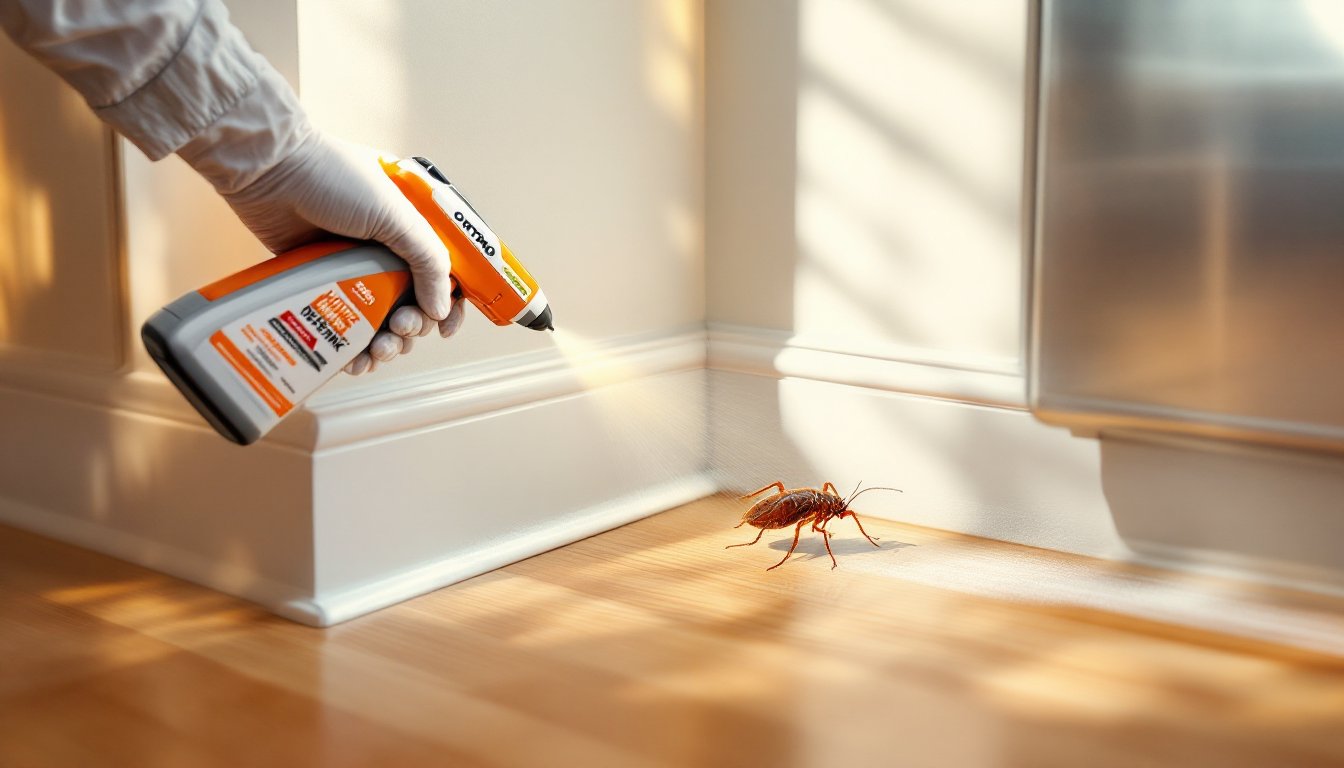
Ortho Home Defense is a perimeter insecticide designed for indoor and outdoor use. The most common formulation, Ortho Home Defense Max Indoor Insect Barrier, contains bifenthrin, a synthetic pyrethroid that attacks the nervous system of insects. When a roach comes into contact with a treated surface, bifenthrin disrupts sodium channels in nerve cells, causing paralysis and eventually death.
The product comes in a ready-to-use 1.33-gallon tank sprayer with a battery-powered wand, making application straightforward for homeowners. You don’t need to mix concentrates or mess with pump sprayers. The formula is odorless once dry, which is a practical consideration if you’re treating baseboards in living areas.
Bifenthrin has a residual effect, meaning it continues to kill insects for weeks after application. Ortho claims up to 12 months of protection along the perimeter when used outdoors, and several months indoors depending on surface type and traffic. It works on contact and ingestion, so roaches don’t need to consume bait, they just need to walk across treated surfaces.
One thing to understand: this is a barrier treatment, not a bait. It’s designed to kill roaches that cross treated zones, but it won’t lure them out of hiding like gel baits or bait stations do. That distinction matters when you’re planning your overall pest control strategy.
Does Ortho Home Defense Actually Kill Roaches?
Yes, Ortho Home Defense kills roaches. Bifenthrin is a proven insecticide with decades of field use, and it’s effective against a broad spectrum of crawling insects, including roaches. In testing and real-world use, roaches that come into contact with treated surfaces typically die within hours.
That said, effectiveness depends on application quality and the severity of your infestation. If you’re dealing with a handful of occasional invaders, like a roach that wandered in from outside, Ortho Home Defense applied along entry points and baseboards will likely handle the problem. For moderate to heavy infestations, especially if roaches are nesting inside wall voids or under appliances, a surface spray alone won’t eliminate the colony. You’ll need to combine it with baits, dusts, or professional treatment.
One advantage: bifenthrin has a relatively long residual compared to older pyrethroids. Surfaces stay lethal to roaches for weeks, which helps catch stragglers and new arrivals. But, roaches can develop resistance to pyrethroids over time, particularly German cockroaches in urban areas where repeated exposure is common. If you’ve been using Ortho or similar products for months without seeing a reduction in activity, resistance could be a factor.
It’s also worth noting that Ortho Home Defense ranked highly in professional cockroach spray reviews, consistently earning recognition for its balance of effectiveness and ease of use.
What Types of Roaches Does It Eliminate?
Ortho Home Defense targets all common household roach species, including:
- German cockroaches (the small, tan ones often found in kitchens)
- American cockroaches (large, reddish-brown, often called “palmetto bugs” in the South)
- Oriental cockroaches (dark, slow-moving, prefer basements and drains)
- Brown-banded cockroaches (smaller, prefer warm, dry areas like cabinets)
German roaches are the trickiest because they reproduce rapidly and tend to live indoors year-round. American and Oriental roaches are larger and often invade from outside, making perimeter treatment more effective. Brown-banded roaches are less common but respond similarly to bifenthrin.
How Long Does It Take to Kill Roaches After Application?
Most roaches that walk across a freshly treated surface will show signs of distress, erratic movement, loss of coordination, within 30 minutes to 2 hours. Death typically occurs within 2 to 6 hours, depending on the roach’s size, health, and the amount of insecticide it contacted.
You won’t see instant knockdown like you would with a direct aerosol spray. Ortho Home Defense is a residual barrier, not a contact killer designed for immediate results. Roaches need to traverse the treated area and absorb enough bifenthrin to disrupt their nervous system. Larger American cockroaches may take longer to succumb than smaller German roaches.
After application, expect to see dead roaches for several days as the colony continues to move through treated zones. If you’re still seeing live roaches after a week, it’s a sign that either your application missed key travel routes, or the infestation is large enough that surface treatment alone isn’t sufficient.
The residual effect, how long the treated surface remains lethal, varies by location. Indoor applications on baseboards, under sinks, and along entry points typically remain effective for 3 to 6 months. Outdoor perimeter treatments break down faster due to UV exposure, rain, and temperature fluctuations, but Ortho claims up to 12 months in protected areas like under eaves or along foundations.
How to Apply Ortho Home Defense for Maximum Roach Control
Application method matters as much as the product itself. Here’s how to get the most out of Ortho Home Defense:
-
Identify roach entry points and travel routes. Look for gaps around pipes, cracks in baseboards, spaces behind appliances, and areas near water sources. Roaches travel along edges, so focus on corners and junctions.
-
Clean surfaces before spraying. Grease, dust, and debris reduce how well the insecticide adheres. Wipe down baseboards and other treatment areas with a damp cloth and let dry.
-
Shake the container and attach the battery-powered wand. Test the spray pattern on cardboard or newspaper first to ensure even flow.
-
Apply a continuous barrier along baseboards, around door frames, window sills, and where utilities enter the home. Hold the wand about 12 inches from the surface and apply a 4-inch-wide band. You want visible coverage without puddling.
-
Treat cracks and crevices where roaches hide: under sinks, behind the stove, along cabinet edges, inside pantry corners. Use the wand’s narrow stream setting if your model has one.
-
Outdoor perimeter treatment: Apply a 12-inch-wide band along the foundation, around doors and windows, and where siding meets the ground. Treat entry points like utility penetrations, vents, and crawl space openings.
-
Let it dry completely before allowing kids or pets back into treated areas, usually 30 minutes to 1 hour.
-
Reapply every 3 months indoors and every 6 to 12 months outdoors, or sooner if you see renewed activity.
Safety note: Wear gloves and avoid direct skin contact with the spray. Use in well-ventilated areas. Keep the product away from aquariums and ponds, pyrethroids are highly toxic to fish.
Common Application Mistakes to Avoid
Even experienced DIYers make these errors:
- Spraying only visible roaches. Ortho Home Defense is a barrier treatment, not a contact spray. Apply it where roaches travel, not where you see them.
- Skipping the exterior perimeter. Roaches often enter from outside. If you only treat indoors, you’re missing the source.
- Applying too thinly or inconsistently. A spotty application leaves gaps in your barrier. Aim for continuous, visible coverage.
- Treating over dirt, grease, or moisture. The insecticide won’t adhere properly. Clean and dry surfaces first.
- Ignoring hidden harborages. Roaches nest in wall voids, behind appliances, and inside cabinets. Surface sprays won’t reach these areas, you’ll need dusts or baits for deep infestations.
- Not reading the label. Some surfaces (like unsealed wood or fabric) may stain. Test in an inconspicuous area first.
When Ortho Home Defense Isn’t Enough: Alternative Solutions
Ortho Home Defense is a solid first-line defense, but it has limits. Here’s when you should consider other options:
Heavy infestations: If you’re seeing roaches during the day, finding egg cases, or noticing a musty odor, your infestation is likely significant. Combine Ortho with gel baits (like Advion or Vendetta) placed in cabinets, under appliances, and inside wall voids. Baits target roaches where they hide, and the slow-acting poison spreads through the colony.
Resistant populations: German cockroaches in urban areas often show resistance to pyrethroids. Switch to a product with a different active ingredient, such as indoxacarb (found in Advion gel bait) or fipronil. Rotation helps prevent resistance.
Structural issues: Roaches thrive in homes with excess moisture, food debris, and accessible entry points. No insecticide will work long-term if you don’t fix leaky pipes, seal cracks, and maintain sanitation. Caulk gaps around pipes, repair torn screens, and eliminate standing water.
Professional treatment: For severe infestations, especially in multi-unit buildings, hire a licensed pest control operator. Pros have access to stronger formulations, specialized equipment (like crack-and-crevice dusters), and the experience to identify harborages you might miss. Many home improvement guides recommend professional help when DIY efforts plateau.
Alternative products: If you prefer non-pyrethroid options, consider diatomaceous earth (a mechanical killer that works through dehydration), boric acid dust (applied in wall voids and under appliances), or insect growth regulators (IGRs) like gentrol, which disrupt roach reproduction. Each has pros and cons in terms of speed, safety, and application difficulty.
For comprehensive cleaning strategies and maintenance routines that support pest control efforts, resources like Good Housekeeping offer tested methods for keeping kitchens and bathrooms, roach hotspots, in top condition.
Finally, remember that roach control is rarely a one-and-done project. Integrated Pest Management (IPM) combines sanitation, exclusion, monitoring, and targeted insecticide use. Ortho Home Defense fits well into that framework, but it’s most effective as part of a broader strategy, not a standalone solution.