
Table of Contents
ToggleCarpet stains happen. Coffee spills, muddy paw prints, wine splashes, they’re part of life. But before reaching for an expensive store-bought cleaner loaded with chemicals you can’t pronounce, there’s a simpler approach hiding in your kitchen cabinets. Homeowners have been mixing effective carpet cleaners from common household ingredients for decades, and these solutions work just as well as their commercial counterparts for most everyday messes. This guide breaks down proven home remedy carpet cleaners, from all-purpose formulas to targeted stain treatments, plus the application techniques that make the difference between clean fibers and sticky residue.
Key Takeaways
- Home remedy carpet cleaners using distilled white vinegar, baking soda, and dish soap are cost-effective alternatives that avoid harsh chemical residues and VOCs found in store-bought products.
- The all-purpose home remedy carpet cleaner recipe (2 cups warm water, ½ cup vinegar, 1 tablespoon dish soap) works for everyday dirt and light stains when applied with proper blotting technique rather than scrubbing.
- Different stains require targeted approaches: coffee and tea respond to acid-based solutions, red wine requires fast action with baking soda or club soda, and pet urine needs saturation with a vinegar-baking soda mixture to eliminate odors at the source.
- Baking soda is an effective natural deodorizer that chemically absorbs carpet odors when left for 2+ hours, eliminating the need for chemical air fresheners that merely mask smells.
- Always blot (never scrub), test solutions on hidden areas first, avoid oversaturation to prevent mold and delamination, and vacuum regularly to extend carpet life and maintain cleanliness. For those considering automated cleaning tools to help maintain carpets between deep cleans, checking bobsweep reviews can provide useful insight into real-world performance on different carpet types and everyday debris.
- Professional cleaning or rentals should be reserved for deep-set stains, water damage, and whole-room cleaning, as most household carpet problems can be solved with DIY home remedy solutions and proper technique.
Why Choose Homemade Carpet Cleaners Over Store-Bought Products
The case for DIY carpet cleaners isn’t just about saving money, though a batch of homemade solution costs pennies compared to $8-15 per bottle of commercial product. It’s about control and transparency.
Commercial carpet cleaners often contain surfactants, optical brighteners, and synthetic fragrances that can leave sticky residues if not rinsed thoroughly. That residue acts like a dirt magnet, making carpets re-soil faster. Some formulations also contain volatile organic compounds (VOCs) that off-gas into indoor air, a concern in homes with poor ventilation, young children, or pets who spend time on the floor.
Homemade cleaners use simple ingredients: distilled white vinegar, baking soda, dish soap, and hydrogen peroxide. You know exactly what’s going on your carpet. There’s no mystery residue, no fragrance overload, and no risk of damaging carpet fibers with harsh solvents.
That said, home remedies have limits. They excel at fresh spills and light-to-moderate soiling. For deep-set stains, extensive pet damage, or whole-room cleaning, a rented carpet extractor or professional service may still be necessary. But for routine maintenance and spot treatment, homemade solutions handle 80% of what most households encounter.
Essential Ingredients for DIY Carpet Cleaning Solutions
Stock these five ingredients and you’ll be ready to tackle nearly any carpet problem:
- Distilled white vinegar (5% acidity): Cuts grease, neutralizes odors, and dissolves alkaline stains. Never use on natural-fiber rugs like wool or silk, acidity can damage protein-based fibers.
- Baking soda (sodium bicarbonate): Absorbs odors, provides mild abrasion for lifting grime, and reacts with vinegar to create fizzing action that loosens debris.
- Hydrogen peroxide (3% solution): Oxidizes organic stains like blood, wine, and coffee. Works as a mild bleaching agent, test on hidden carpet areas first, especially with darker colors.
- Clear dish soap (unscented, dye-free): Acts as a surfactant to lift oil-based stains. Use sparingly, too much soap creates hard-to-rinse suds.
- Warm water: Helps dissolve ingredients and improves cleaning action. Avoid hot water above 120°F, which can set protein-based stains like blood or milk.
Optional boosters include cornstarch (absorbs fresh liquid spills), rubbing alcohol (tackles ink and dye), and essential oils like tea tree or lavender (add scent and mild antimicrobial properties, use 5-10 drops per quart of solution).
Always use distilled or filtered water in spray bottles to prevent mineral deposits that clog nozzles. Store mixed solutions in labeled containers away from sunlight. Most vinegar-based cleaners stay effective for several months.
Best All-Purpose Home Remedy Carpet Cleaner Recipe
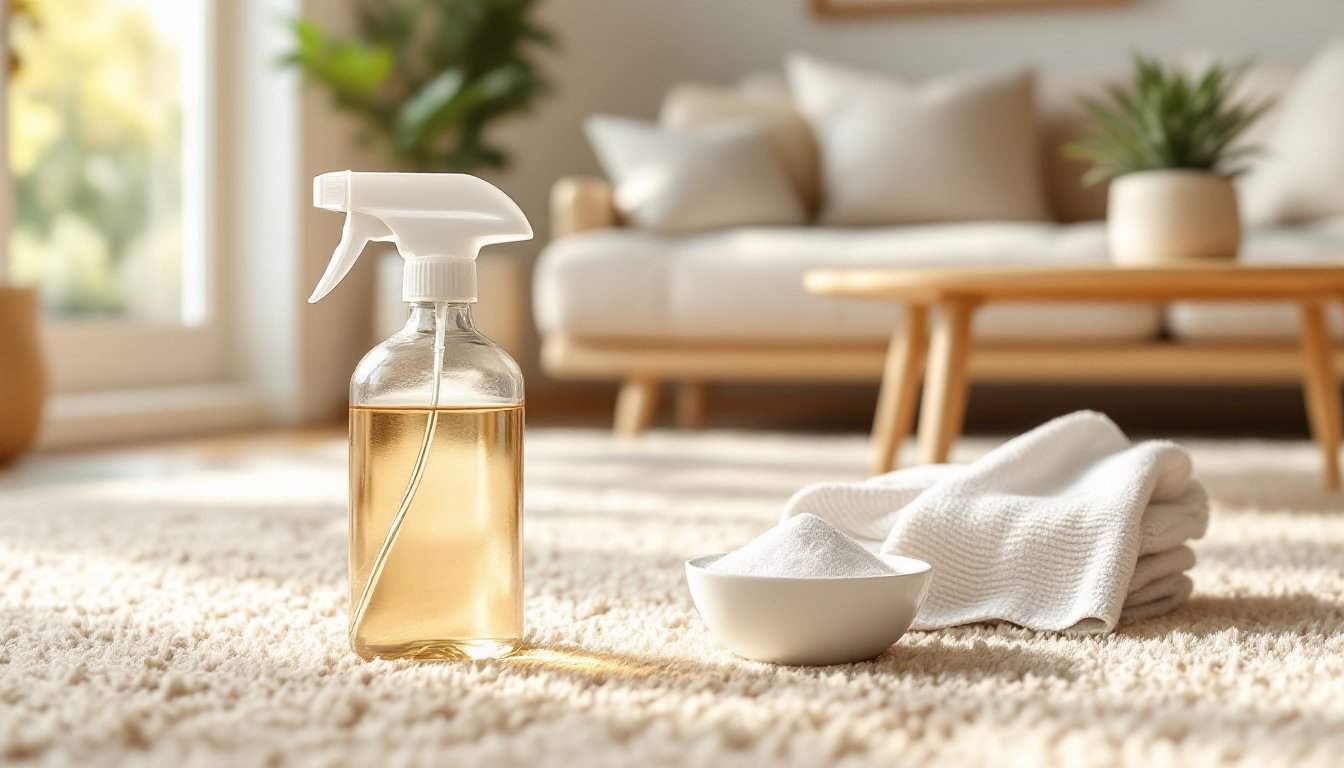
This formula handles everyday dirt, light stains, and general freshening. It works in spray bottles for spot cleaning or in carpet cleaning machines for larger areas.
All-Purpose Carpet Cleaner (1 quart)
- 2 cups warm water
- ½ cup distilled white vinegar
- 1 tablespoon clear dish soap
- Optional: 10 drops essential oil
Mix ingredients in a spray bottle or measuring pitcher. Shake gently, vigorous shaking creates excess foam.
Application:
- Vacuum the carpet thoroughly to remove loose dirt and debris. Cleaning over embedded grit grinds it deeper into fibers.
- Test the solution on an inconspicuous spot (inside a closet, behind furniture). Wait 10 minutes and blot with a white cloth. Check for color transfer or fiber damage.
- Spray the solution lightly onto the stained area. Don’t oversaturate, excess moisture can soak into carpet backing and padding, leading to mold or delamination.
- Let it sit for 3-5 minutes to break down soil.
- Blot (don’t rub) with a clean white cloth or paper towels. Work from the outside of the stain toward the center to prevent spreading.
- Rinse by blotting with a cloth dampened in plain water. This step is critical, leftover soap attracts dirt.
- Blot dry, then place a folded towel over the area and weight it down (a book or brick works) to wick up remaining moisture.
For use in a carpet cleaning machine, dilute the recipe with an additional quart of water. Run a rinse-only pass with plain water afterward to remove residue.
Many homeowners find success with DIY carpet cleaning methods that emphasize natural ingredients and proper technique over aggressive chemicals.
Tackling Tough Stains: Coffee, Wine, and Pet Accidents
Different stains require targeted chemistry. Here’s how to approach the big three:
Coffee and Tea
These tannin-based stains respond to acid.
- Blot up as much liquid as possible immediately.
- Mix 1 cup water, ½ cup vinegar, and 1 tablespoon dish soap.
- Apply to the stain, wait 5 minutes, blot. Repeat if needed.
- For set-in coffee stains, apply a paste of 2 parts hydrogen peroxide to 1 part dish soap. Let sit 10 minutes, blot, rinse.
Red Wine
Act fast, wine sets quickly.
- Blot (never rub) the spill.
- Cover with a thick layer of baking soda or salt to absorb liquid. Wait 10 minutes.
- Vacuum up the powder.
- Mix equal parts hydrogen peroxide and dish soap (1 tablespoon each). Apply, let sit 15 minutes, blot.
- Rinse with plain water and blot dry.
Alternatively, club soda works well on fresh wine, the carbonation lifts the stain mechanically. Pour directly, blot repeatedly.
Pet Urine
Urine contains uric acid crystals that reactivate with moisture, causing lingering odor.
- Blot up fresh urine with paper towels. Stand on the towels to absorb as much as possible.
- Mix 1 cup water, 1 cup vinegar, and 2 tablespoons baking soda. The mixture will fizz, wait for the reaction to calm, then pour into a spray bottle.
- Saturate the stained area (you need to reach the carpet pad). Wait 10 minutes.
- Blot thoroughly.
- Sprinkle with fresh baking soda, let sit overnight, vacuum.
- For old urine stains, use an enzymatic cleaner (available at pet stores), these break down uric acid crystals. Home remedies can’t replicate that enzymatic action.
Safety note: Never mix vinegar and hydrogen peroxide in the same bottle, this creates peracetic acid, which is corrosive. Use them in separate steps.
Natural Deodorizing Methods to Eliminate Carpet Odors
Odors in carpet usually mean trapped moisture, bacteria, or old spills that weren’t fully cleaned. Masking them with air freshener doesn’t solve the problem.
Baking Soda Deodorizer
This is the workhorse method.
- Vacuum thoroughly.
- Sprinkle a generous layer of baking soda over the carpet. For a 10×12 room, use about 1-2 cups.
- Work it into the fibers with a broom or brush.
- Let sit for at least 2 hours, or overnight for strong odors.
- Vacuum slowly to pick up all the powder.
Baking soda absorbs odors chemically, it doesn’t just cover them up. For extra freshening, mix in 10-15 drops of essential oil per cup of baking soda before sprinkling.
Vinegar Spray
For lingering smells after cleaning.
- Mix equal parts water and vinegar in a spray bottle.
- Lightly mist the carpet, don’t soak it.
- Open windows and run fans. The vinegar smell dissipates as it dries, taking other odors with it.
Activated Charcoal
Place bowls of activated charcoal (not briquettes) around the room. It adsorbs odor molecules from the air. This works especially well in basements or rooms with poor airflow.
If odors persist after these treatments, moisture may have reached the carpet padding or subfloor. Pull back a corner of the carpet to check. Wet padding needs to be removed and replaced, it’s a breeding ground for mold. That’s a job for a professional, and depending on the extent, may require subfloor treatment.
Application Tips and Carpet Care Best Practices
Good technique makes the difference between a clean carpet and a bigger mess.
Always blot, never scrub. Scrubbing frays carpet fibers, spreads stains, and pushes soil deeper into the pile. Use a blotting motion with white cloths or paper towels. Colored towels can transfer dye.
Test every solution first. Even “safe” ingredients can cause dye bleeding or fiber damage on certain carpets. Test in a closet or under furniture. Wait 10 minutes and check for color transfer or texture change.
Don’t oversaturate. Carpets are designed to shed surface moisture, but once liquid reaches the backing and pad, drying becomes difficult. Excess moisture invites mold, odor, and delamination (when the backing separates from the pile). Use light, repeated applications instead of soaking.
Ventilate and dry thoroughly. Open windows, run fans, or use a dehumidifier. Aim for complete drying within 6-12 hours. If carpet still feels damp the next day, you used too much liquid.
Vacuum regularly. Dry soil is abrasive. Every footstep grinds it against carpet fibers, causing wear. Vacuum high-traffic areas twice a week, other areas weekly. This extends carpet life more than any cleaning solution.
Know when to call a pro. Whole-room cleaning, water damage, extensive pet soiling, or stubborn stains that don’t respond to spot treatment all warrant professional help. Rental carpet cleaners (available at hardware stores) work for DIY deep cleaning, but they require careful technique, over-wetting is common with rentals.
Wear safety gear. Even mild ingredients like vinegar can irritate eyes. Use gloves when handling cleaning solutions and ensure good ventilation. If using hydrogen peroxide on large areas, wear safety glasses, splashes sting.
For more comprehensive techniques and professional tips, resources like carpet cleaning guides and home improvement tutorials offer additional methods and product comparisons.
Conclusion
Home remedy carpet cleaners aren’t a gimmick, they’re practical, effective solutions for everyday maintenance and stain treatment. With a handful of common ingredients and the right technique, most homeowners can handle spills, odors, and dirt without expensive commercial products or professional service. The key is acting quickly, using the appropriate formula for the stain type, and avoiding over-wetting. Keep these recipes and methods in your routine, and your carpets will stay cleaner, fresher, and last longer.