
Table of Contents
ToggleRemodeling a San Francisco home means navigating Victorian-era quirks, seismic retrofitting requirements, and some of the strictest building codes in the country. The city’s dense housing stock, mostly pre-1980 construction, presents structural challenges that rarely appear in suburban ranch homes. Homeowners here face steep permit fees, limited contractor availability, and neighborhood design review boards that scrutinize everything from window trim to garage door color. But the payoff is real: strategic remodels can add significant value to properties in one of the nation’s most competitive real estate markets, while improving livability in homes where every square foot counts.
Key Takeaways
- Home remodeling in San Francisco requires navigating Victorian-era structures, mandatory seismic retrofitting (adding $8,000–$25,000), and some of the nation’s strictest building codes.
- San Francisco’s permitting process is among the slowest in California, with standard projects taking 4–8 weeks and discretionary review projects extending 6–12 months before construction begins.
- Kitchen remodels in compact San Francisco spaces prioritize vertical storage, European-style frameless cabinets, and counter-depth appliances to maximize the typical 80–120 square foot kitchens in pre-war homes.
- San Francisco construction costs run 25–40% above California averages due to high labor rates ($75–$95/hour for carpenters, $110–$150/hour for electricians), permit fees, and material logistics challenges.
- Mid-range kitchen remodels cost $55,000–$95,000, while garage ADU conversions range $120,000–$220,000; always set aside 20–25% contingency for unforeseen conditions in pre-1950 homes.
- Hire only licensed California contractors (verify at cslb.ca.gov), demand proof of $2 million general liability insurance, request three recent references, and establish written change order and payment milestone procedures to protect your investment.
Why San Francisco Home Remodeling Requires Special Consideration
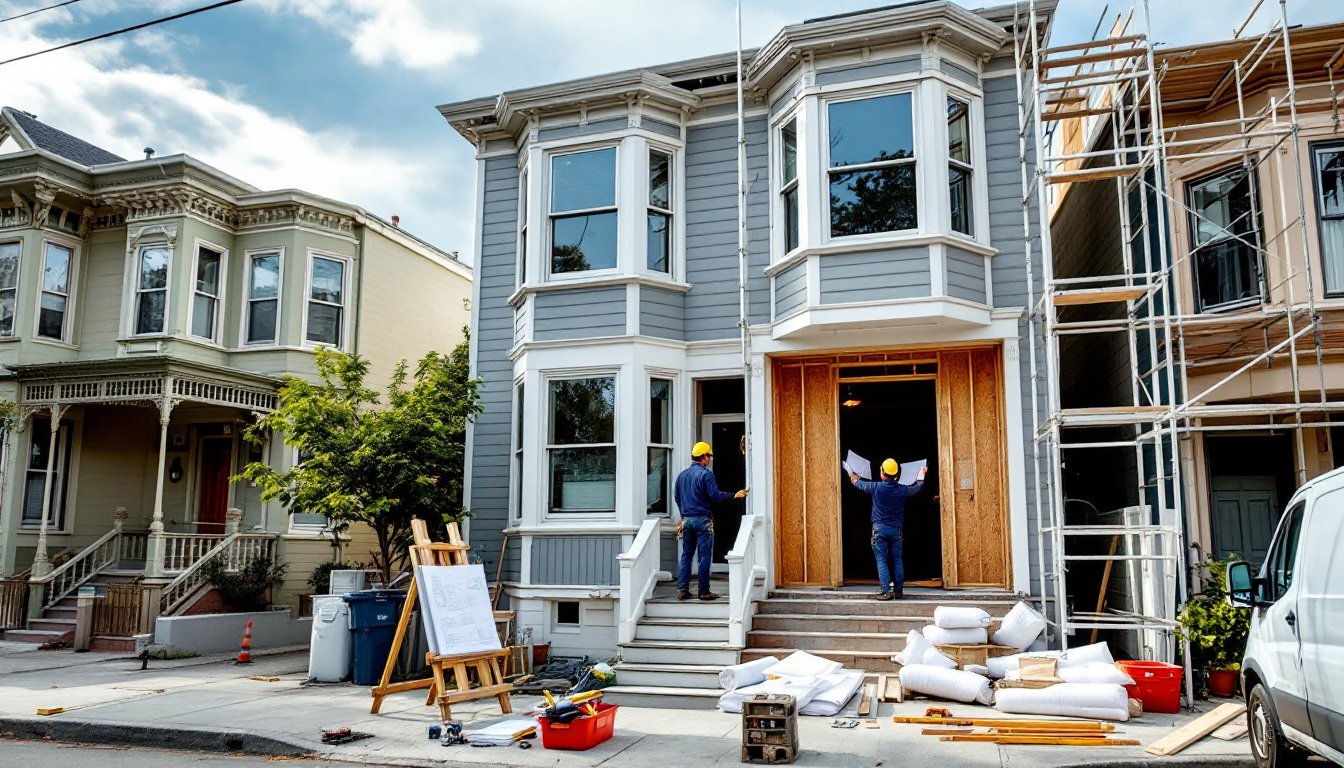
San Francisco’s housing inventory differs dramatically from most American cities. Approximately 70% of residential structures were built before 1960, with significant portions dating to the 1900s-1930s. These homes feature unreinforced masonry foundations, knob-and-tube wiring, galvanized plumbing, and framing that predates modern building codes.
Seismic requirements dominate structural work. Any remodel touching load-bearing walls or foundations triggers mandatory seismic retrofitting under San Francisco Building Code Chapter 34A. This typically includes foundation bolting, cripple wall bracing with plywood sheathing, and sometimes steel moment frames for soft-story buildings. Budget an additional $8,000-$25,000 for basic residential retrofits.
The city’s microclimate variations affect material selection. Fog-belt neighborhoods near the ocean require rot-resistant lumber (cedar, redwood, or pressure-treated Doug fir) for exterior work, while inland districts deal with greater temperature swings. Moisture barriers and proper flashing details become critical in Richmond and Sunset districts where condensation problems plague poorly sealed assemblies.
Space constraints shape design decisions. Most San Francisco lots measure 25′ × 100′ or smaller, with homes sharing party walls. This limits expansion options and makes vertical additions or basement conversions the primary square-footage solutions. Structural engineers typically charge $3,000-$8,000 for addition plans that address shear wall requirements and lateral load paths.
Understanding San Francisco’s Unique Permitting and Regulations
San Francisco’s Department of Building Inspection (DBI) operates one of the slowest permit systems in California. Standard over-the-counter permits take 4-8 weeks: projects requiring Discretionary Review can stretch 6-12 months before breaking ground.
Permit categories break down as follows:
- Category I (Ministerial): Kitchen/bath remodels without structural changes, door/window replacements in existing openings, re-roofing. Typical timeline: 2-4 weeks, fees $800-$2,500.
- Category II (Discretionary Review possible): Additions, garage conversions, significant façade changes. Timeline: 3-6 months if triggered, fees $3,000-$15,000+.
- Category III (Major alterations): Vertical additions, ADUs, full gut renovations. Timeline: 6-18 months, fees $8,000-$40,000+.
Many neighborhoods fall under historic preservation districts or homeowners associations with design review authority. The Planning Department maintains separate jurisdiction over exterior changes in areas like Pacific Heights, Russian Hill, and parts of the Mission. Expect additional architectural review fees ($500-$2,000) and mandated design elements like wood siding profiles or window muntin patterns.
Required inspections multiply compared to other jurisdictions. A typical kitchen remodel triggers: foundation (if walls removed), framing, rough plumbing, rough electrical, rough mechanical, insulation, fire-rated assemblies, and final. Each inspection requires 24-48 hours’ notice and costs $200-$400. Miss a required inspection, and you’ll open walls to expose covered work.
DIY permitting is possible but risky. One incorrect submittal detail can delay projects months. Most homeowners hire expediters ($2,500-$8,000) who navigate DBI’s systems professionally, though this adds to upfront costs.
Most Popular Home Remodeling Projects in San Francisco
Kitchen Remodels for Small San Francisco Spaces
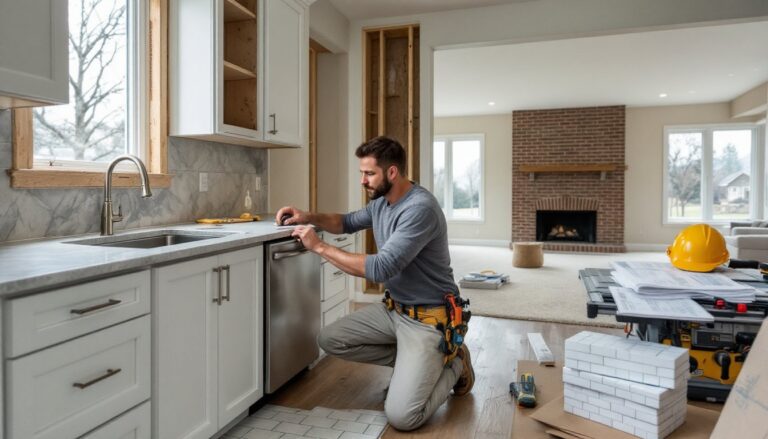
San Francisco kitchens average 80-120 square feet in pre-war homes, half the size of suburban layouts. Smart remodels maximize vertical storage, eliminate soffits to expose full-height cabinets, and remove non-load-bearing walls between kitchens and dining rooms.
Layout priorities focus on the work triangle. In galley configurations (common in flats and Edwardians), position the sink and dishwasher along one wall with the range opposite, maintaining 42″-48″ clearance for two cooks. Peninsula extensions add prep space without formal islands that block circulation.
Cabinet specifications matter in tight quarters. European-style frameless construction gains 1-2″ of interior width per cabinet compared to face-frame boxes. Soft-close drawer systems with full-extension slides handle heavier loads than traditional glides. Corner solutions like LeMans units or magic corners recover dead space that simple lazy Susans waste.
Countertop materials need durability in compact work zones. Quartz engineered stone (Caesarstone, Silestone) handles San Francisco’s hard water better than marble, requires no sealing, and comes in thin 2cm slabs that preserve cabinet height. Budget $65-$95 per square foot installed.
Appliance depth determines usable space. Standard 30″ refrigerators protrude 6″ past typical 24″ base cabinets: counter-depth models ($2,200-$4,500) align flush but sacrifice 3-4 cubic feet of capacity. Most contractors recommend panel-ready dishwashers that blend with cabinetry rather than stainless fronts that create visual clutter.
Bathroom Upgrades and ADU Conversions
Bathroom remodels tackle outdated plumbing and water damage in homes where cast-iron drains and galvanized supply lines have exceeded their 60-80 year lifespan. Replacing corroded galvanized with PEX or copper runs $1,200-$2,500 for a typical bathroom, including manifold systems that simplify future repairs.
Victorian and Edwardian floor plans often locate bathrooms in interior spaces without exterior walls or windows. Current code requires mechanical ventilation (110 CFM minimum) vented to exterior, not into attics. Panasonic WhisperCeiling or Broan Sensonic units ($180-$350) meet sound ratings below 1.5 sones while moving sufficient air.
Shower waterproofing follows strict protocols. Use Schluter Kerdi or similar sheet membranes over cement backer board, not outdated tar paper or paint-on products. The membrane must extend 3″ beyond the curb and 6″ above the showerhead on all walls. Inspect for continuity before tile work, callbacks for leak repairs cost $3,000-$8,000.
ADU conversions transform garages, basements, or unused spaces into income-producing units. San Francisco’s 2022 ADU ordinance simplified approvals, but projects still require separate utilities, fire-rated assemblies between dwelling units (1-hour minimum), egress windows in sleeping areas (5.7 square feet net clear opening), and seismic upgrades.
Garage conversions face the fewest structural hurdles since foundations and framing exist. Challenges include slab insulation (R-10 rigid foam minimum under new flooring), separate electrical panels (125-amp minimum), and gas line extensions for heating. Homeowners considering cost estimators for remodeling projects should account for $120,000-$220,000 total costs for 400-600 square foot garage ADUs in San Francisco, depending on finish level and existing utility access.
Budgeting for Your San Francisco Remodel: What to Expect
San Francisco construction costs run 25-40% above California averages due to labor rates, permit fees, and material logistics. Union carpenter rates hit $75-$95 per hour: licensed electricians charge $110-$150 per hour. Parking restrictions and narrow street access add costs for material delivery and dumpster placement.
Typical project ranges (2026 pricing):
- Minor kitchen refresh (cabinets repainted, new countertops, appliances): $18,000-$35,000
- Mid-range kitchen remodel (new cabinets, countertops, appliances, fixtures, some layout changes): $55,000-$95,000
- High-end kitchen (custom cabinets, premium appliances, structural changes): $120,000-$200,000+
- Full bathroom remodel (tub/shower, vanity, toilet, tile, fixtures): $28,000-$55,000
- Basement conversion (bedroom + bathroom, no structural changes): $80,000-$140,000
- Second-story addition (300-500 square feet): $250,000-$450,000
Permit and soft costs consume 20-30% of budgets:
- Plan sets from architects: $8,000-$25,000
- Structural engineering: $3,500-$12,000
- Permits and fees: $3,000-$40,000 (scaled to project valuation)
- Expediter services: $2,500-$8,000
Contingency planning is mandatory. Set aside 20-25% for unforeseen conditions in pre-1950 homes. Opening walls frequently reveals undersized joists, missing fire blocking, amateur electrical work, or foundation damage requiring immediate correction. Asbestos abatement ($2,000-$8,000) and lead paint remediation add costs in pre-1978 construction.
Those researching budgets through renovation cost guides will find San Francisco figures cluster at the top end of national ranges. Material costs stay relatively consistent, but labor and regulatory expenses drive premiums.
Finding the Right Remodeling Contractor in San Francisco
San Francisco’s contractor shortage makes scheduling the primary challenge. Quality remodelers book 3-6 months ahead: expect delays if approaching spring (peak season). Never hire based solely on availability, contractors with open schedules often signal reliability problems.
Licensing verification is non-negotiable. Every contractor must hold an active California Contractor’s State License (C-class). Verify status at cslb.ca.gov, checking for complaints, bond status, and workers’ comp coverage. General contractors (B license) handle multi-trade projects: specialty contractors (C-10 electrical, C-36 plumbing) work within their classifications.
Request minimum three references from projects completed within the past 18 months in similar San Francisco housing stock. Victorian remodeling experience doesn’t translate automatically to mid-century homes: ask specific questions about their work on your home’s era and construction type.
Contract specifics protect both parties:
- Payment schedules tied to milestones, not dates. Standard structure: 10% deposit, 25% at rough-in, 25% at drywall, 25% at substantial completion, 15% final (after sign-offs).
- Change order process with written authorization required before additional work proceeds. Lock in unit pricing for common changes (outlets: $150 each, recessed lights: $220 each).
- Lien release procedures requiring signed conditional and unconditional releases from all subcontractors and material suppliers at each payment.
- Timeline with liquidated damages clause ($200-$500 per day past agreed completion, with allowances for permit delays).
- Cleanup protocols specifying daily site maintenance and final detail cleaning.
Check contractor reviews and project costs but verify claims independently. Online ratings help identify consistent performers, though they shouldn’t replace thorough vetting.
Communication style matters during months-long projects. Does the contractor respond to emails within 24 hours? Do they explain code requirements clearly? Can they provide detailed breakdowns of allowances versus fixed costs? The lowest bid often hides unclear scopes or substituted materials.
Demand proof of insurance: general liability ($2 million minimum) and workers’ compensation. Request certificates naming you as also insured. Unlicensed or uninsured contractors create liability nightmares when workers get injured or property damage occurs.